Level 1 vs Level 2 Charging for Everyday Driving
@thechargingspace
Understanding Your Home Charging Options
When you bring home an electric vehicle, the question of how to charge it becomes a daily part of life. For most drivers, the choice comes down to two standard options: Level 1 charging, which uses a regular household outlet, and Level 2 charging, which requires a dedicated circuit and a special charger. Each has its place, and the right pick depends on your driving habits, your home's electrical setup, and how much time you want to spend plugged in.
Level 1 charging is the simplest. Every EV comes with a charging cable that can plug into a standard 120-volt outlet, the same kind you use for a lamp or a phone charger. You just plug the car in overnight, and by morning you have added some range. For many people, especially those with short commutes or who drive only a few miles a day, this is perfectly adequate. It adds about 3 to 5 miles of range per hour, so over a 10-hour overnight session you gain roughly 30 to 50 miles. That covers the average daily commute in the United States, which hovers around 30 to 40 miles round trip.
But Level 1 charging has limits. If you drive more than that, or if you need to top up quickly between trips, the slow rate becomes a problem. It also puts a continuous load on a regular outlet for hours on end, which can stress older wiring or outlets not designed for that kind of duty. Many homes have outlets on circuits shared with other rooms, so plugging in an EV can trip a breaker if a vacuum or a space heater is running on the same circuit. This is where Level 2 charging steps in.
What Level 2 Charging Offers
Level 2 charging uses a 240-volt circuit, similar to what powers an electric dryer or a stove. It delivers power at a much higher rate, typically adding 20 to 30 miles of range per hour. That means a full charge for most EVs happens in 4 to 8 hours, rather than the 20-plus hours it can take with Level 1. For daily driving, you can plug in for a couple of hours and have plenty of range for the next day.
The key hardware for Level 2 charging is a wall-mounted charger that connects to a dedicated EV circuit. This circuit is wired directly from your electrical panel to the charger location, usually in a garage or driveway. It has its own circuit breaker, sized to match the charger's power draw, and it is not shared with any other outlets or appliances. This setup is safer and more reliable than using a shared circuit, because the load is predictable and the wiring is designed for continuous high current.
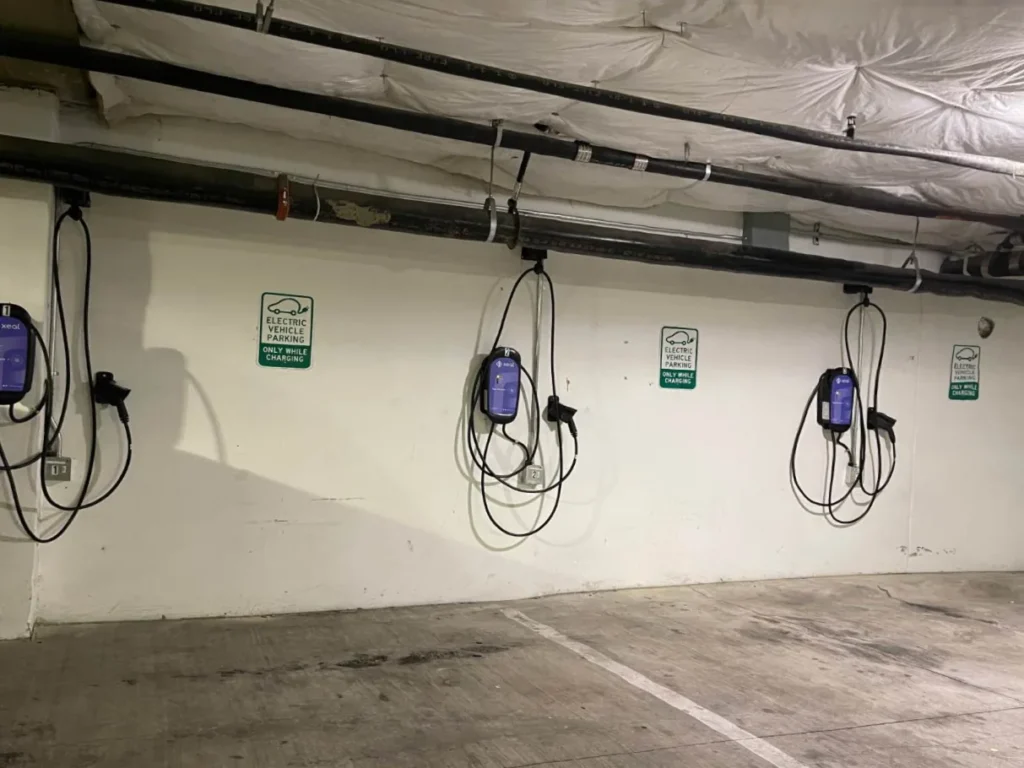
Installing a Level 2 charger at home involves more than just buying the unit. An electrician needs to run new wiring, install the circuit breaker, and mount the charger. They also need to do a load calculation on your electrical panel to see if it has enough capacity for the added draw. If the panel is already near its limit, an upgrade may be needed. This is a job for a licensed professional, not a DIY project, because mistakes can lead to fire or shock hazards.
Comparing the Two for Everyday Use
For someone who drives less than 30 miles a day and can leave the car plugged in overnight, Level 1 charging is often enough. It costs nothing extra in equipment beyond the car's included cable, and it uses an outlet you already have. But it requires patience and a predictable schedule. If you come home with a low battery and need to leave again in a few hours, Level 1 won't help much.
Level 2 charging, on the other hand, gives you flexibility. You can top up quickly between errands, charge during off-peak electricity hours, and never worry about waking up to a nearly empty battery. It also allows you to take advantage of time-of-use utility rates, if your power company offers them. By charging when electricity is cheapest, usually late at night, you can save on running costs over time.
There is also the matter of convenience. With Level 2, you don't have to plan your charging around your schedule as tightly. A quick plug-in after dinner can add enough range for the next day's driving, even if you have a longer commute or need to run extra errands. For households with two EVs, Level 2 charging becomes almost essential, because sharing a single Level 1 outlet between two cars would leave both with limited range.
When Each Option Suits You Best
Level 1 charging works well for people who live in apartments or rentals where installing a new circuit is not possible. It is also a good fit for those with very short daily drives and access to a dedicated outlet that is not shared with other heavy appliances. If you drive a plug-in hybrid with a smaller battery, Level 1 can fully charge it overnight without issue.

Level 2 charging is better suited for homeowners who have a garage or a driveway, drive more than 30 miles a day, or want the fastest possible charge at home. It is also the right choice if you plan to keep your EV for several years, because the infrastructure adds value to the home and makes charging more convenient every day. For anyone who has an electric panel with spare capacity, the installation is straightforward and the benefits are immediate.
What to Consider Before Choosing
Before you decide, look at your driving patterns over a typical week. Track how many miles you drive on your busiest day, and compare that to what Level 1 can deliver in the time you have the car parked. If the numbers are close, Level 1 might work. But if you often have days where you drive 50 or 60 miles and need the car ready again in the morning, Level 2 is the safer bet.
Also consider your home's electrical system. An older home with a 100-amp panel may struggle to accommodate a new 240-volt circuit without an upgrade. A newer home with a 200-amp panel likely has room. An electrician can do a load calculation to tell you for sure. This is not something to guess at, because overloading a panel can cause breakers to trip or, in extreme cases, start a fire.
The location of the charger matters too. If you park outside or in a detached garage, the wiring route from the panel to the charger may require trenching or running conduit. That adds to the installation cost and complexity. A simple installation in an attached garage with the panel nearby is much more affordable.
Making the Right Call for Your Home
For most everyday drivers, Level 2 charging is the more practical long-term solution. It gives you faster charging, greater flexibility, and a dedicated EV circuit that is safe and reliable. The initial cost of installation is an investment, but it pays off in convenience and peace of mind. You never have to worry about whether you will have enough range for an unexpected trip or a longer day.

Level 1 charging is a good backup or a temporary solution. If you are renting or plan to move soon, it may not make sense to invest in a Level 2 installation. But for homeowners who plan to stay put, installing a Level 2 charger is one of the best upgrades you can make for your EV ownership experience.
Ultimately, the choice comes down to how much you drive and how much you value convenience. If you can live with the slow pace of Level 1 and your driving habits fit within its limits, you can save the installation cost. But if you want the freedom to charge quickly and reliably every day, Level 2 is the way to go. A qualified electrician can help you understand your home's capacity and what it would take to add a dedicated EV circuit, so you can make an informed decision.